Temporary architecture (2)
Campus (5)
Construction (69)
Costs (56)
Density (346)
Drawing (1)
Complex buildings (19)
Hybrid buildings (123)
Leaning (4)
Efficiency (9)
Remove (18)
Civic Facilities (84)
Schools (3)
Public spaces (181)
Exhibitions (1)
Grand Tour 1977 (5)
History (52)
Interior (48)
The City (75)
Low-cost (49)
Mix of Uses (27)
Moscow Tour (5)
Offices / Workspaces (65)
Organization (10)
Landscaping (152)
Prefab (11)
Recycle (23)
Retrieve (22)
Reduce (20)
Remediate the territories (44)
Refurbishment (86)
Reuse (60)
Simulate (7)
Sustainability (90)
Design techniques (27)
Japanese lineages Tour (18)
Multiple uses (12)
Housing (109)
Collective housing (475)
Collective Housing XX Century (6)

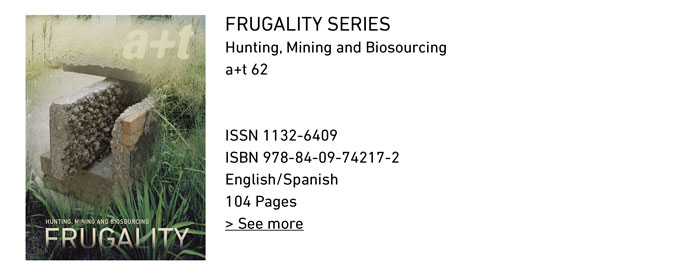
In this third issue of the Frugality series -a critical response to the demands of the environmental agenda- component hunting, urban mining, and biosourced materials- challenge the notion of architecture as a finite object, advancing instead a material ethic in which design becomes an act of negotiation, translation, and ecological and economic commitment.
In the contemporary context, concepts such as component hunting, urban mining, and bio-sourced materials do not merely denote technical strategies. Rather, they articulate ways of reconfiguring the relationship between architecture, materiality, and productive processes.
(more...)


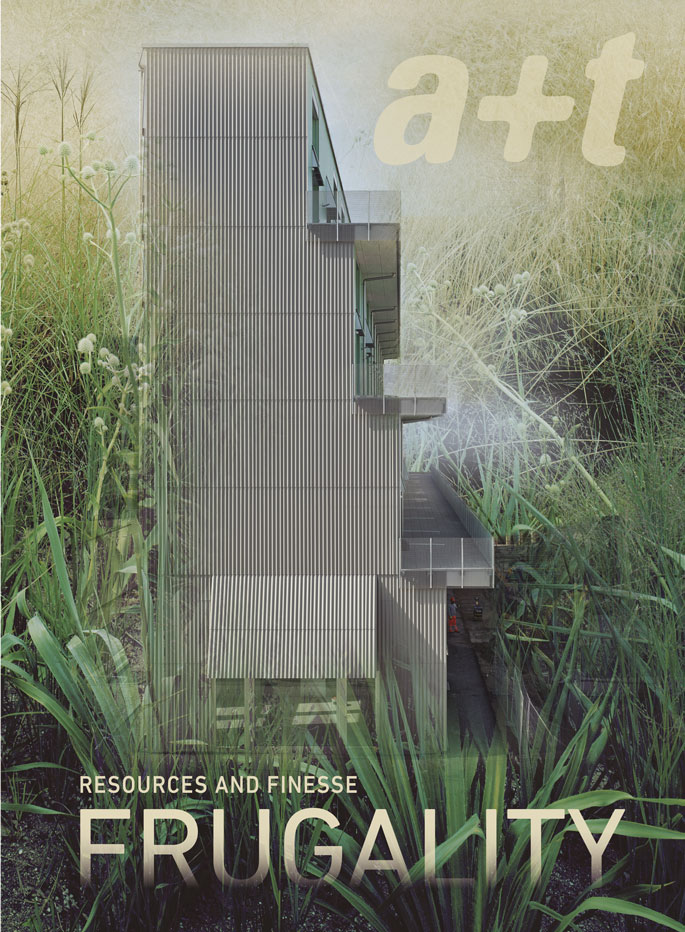
The combination of the resources available to architecture and the ability to resort to a creative finesse is our proposal for this issue of the Frugality series, a critical response to the demands of the environmental agenda.
These are mechanisms without cost, pure intellectual reflection. The absence of su-perfluous components creates objects stripped of cladding and unnecessary layers. Simple constructions that employ the pseudo-craftsmanship of industrialised assembly as a personalised pattern, imparting identity to the final outcome.

(more...)
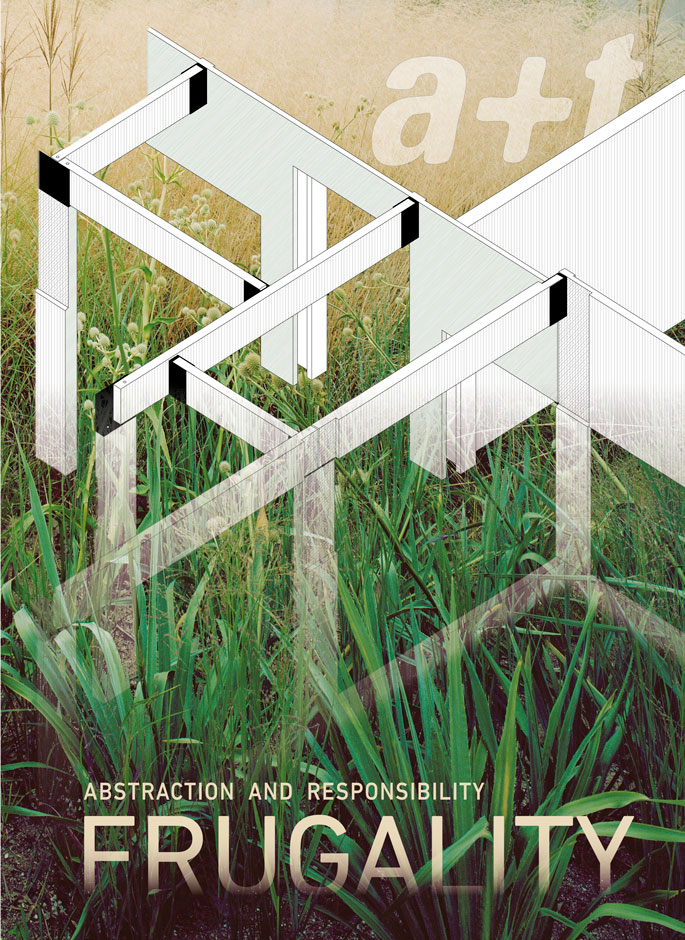
Frugality means less material, less energy, less expense, greater respect for the environment, greater constructive sincerity, and greater social honesty.
Frugality is not imposed by social or cultural movements, or even by political transformations. It is the pure awareness of the moment of restriction and deprivation that conditions the way of acting. Frugality is dismantling the iconic and symbolic character of architecture. It imbues it with a basic rationality, a new classicism without style, standardised technology, and programmatic flexibility.
The first issue of this new series is entitled Abstraction and Responsibility, the essential features of this frugal architecture whose sole aim is to become a structure-shelter of life.
(more...)
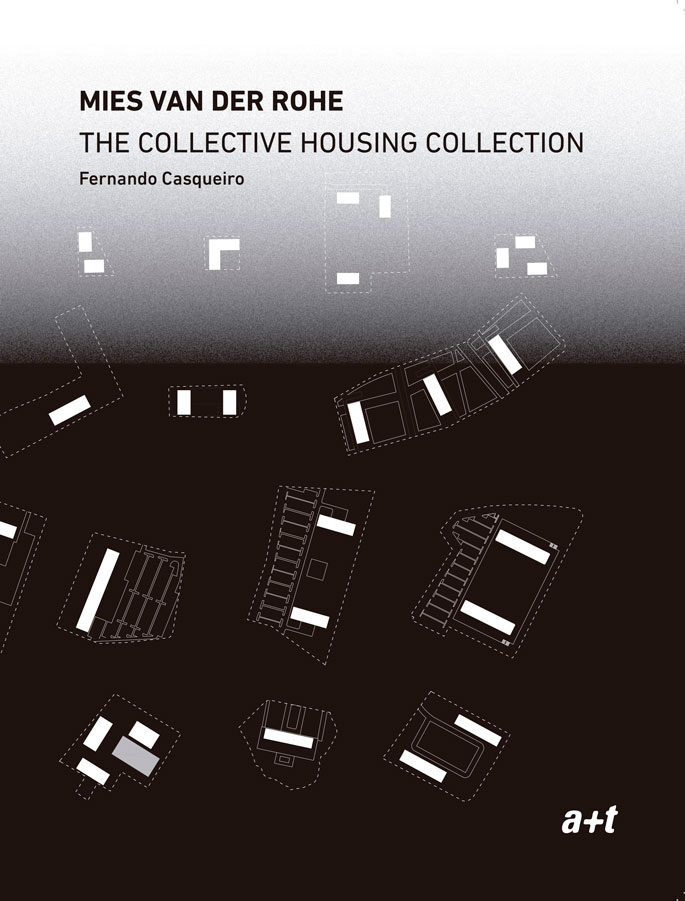
From his early years in Germany to the end of his life in the United States, collective housing has been very present in the work of Ludwig Mies van der Rohe. The research carried out by Fernando Casqueiro, Associate Professor at ETSAMadrid, compiles, for the first time, the entire collection of collective housing projects signed by the master.
Each work has been analysed, redrawn and compared on the same parameters.
The result is a voyage through the creation and consolidation of a typology, culminating in 860-880 Lake Shore Drive and the Lafayette Pavilion.
The collection is made up of 36 projects, built or only designed, that cover Mies' life, his relationship with his clients and the influence of his collaborators, from his beginnings in Berlin until his death in Chicago.
MIES VAN DER ROHE. THE COLLECTIVE HOUSING COLLECTION is a reference volume to learn about the innovations that Mies brought to the composition of the modern floor plan and its relationship with the façade.
(more...)

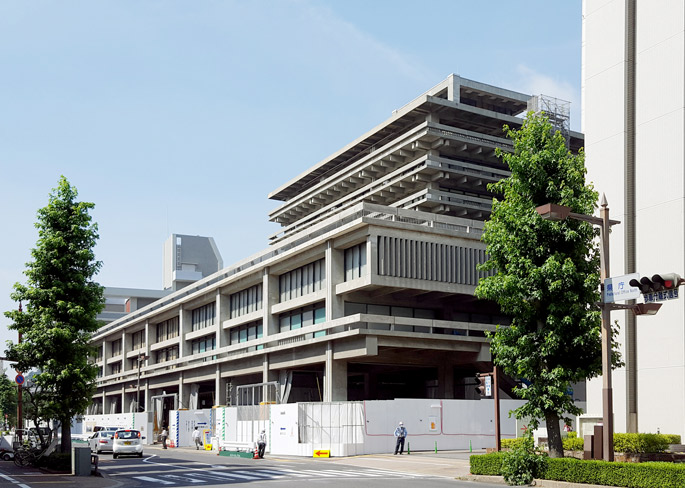
Project published in Japan Diaries. Architecture and more
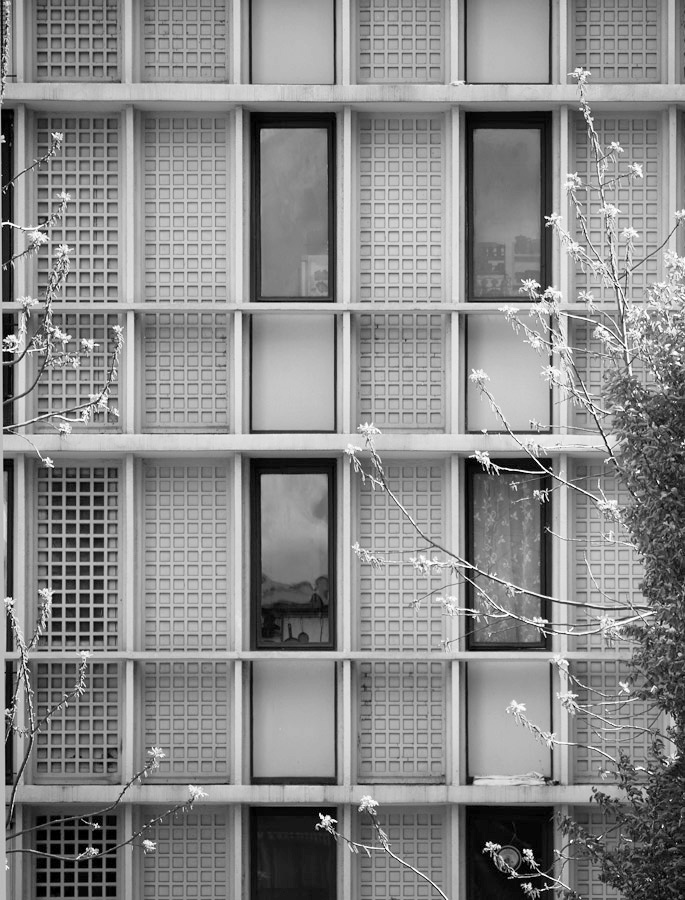
Fernand Pouillon. Résidence du Point du Jour. Paris, 1957-1963
“The facade reflects the pragmatism and standardization used for building the type. Modulating and simplifying the enclosure solution does not allow for any concessions to be made.
The north-facing facades are modulated using pre-cast concrete frames filled in with either glazed metal profiles or reinforced concrete lattice panels.
All the south modules are glazed and are set back so that the o.
(more...)

This is the action number 1 of 54 that can be found in the issue of a+t magazine entitled Reclaim - Domestic Actions. It forms part of the Re- process Reduce, that collects domestic actions that consist of forgoing certain conventions that increase both waste material and added material.
(more...)
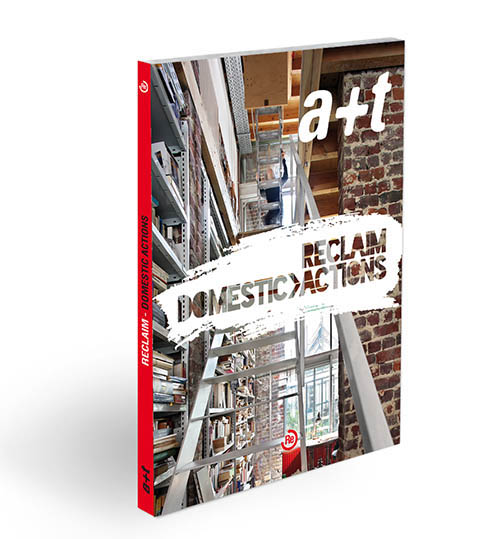
The latest a+t magazine issue, Reclaim - Domestic Actions, contains 54 actions that strip and boil down the home to its most basic roots...
(more...)

a+t 41 Reclaim Domestic Actions. Action 28: Creating an open floor plan with a prop structure
The third chapter, dedicated to Remove, collects domestic actions in which one observes a clear intention of eliminating the material with the purpose of...
(more...)








 I've read and agree to